This week’s parsha introduces המקום אשר יבחר ה׳:
ה כי אם אל המקום אשר יבחר ה׳ אלקיכם מכל שבטיכם לשום את שמו שם לשכנו תדרשו ובאת שמה׃ ו והבאתם שמה עלתיכם וזבחיכם ואת מעשרתיכם ואת תרומת ידכם; ונדריכם ונדבתיכם ובכרת בקרכם וצאנכם׃ ז ואכלתם שם לפני ה׳ אלקיכם ושמחתם בכל משלח ידכם אתם ובתיכם אשר ברכך ה׳ אלקיך׃ ח לא תעשון ככל אשר אנחנו עשים פה היום; איש כל הישר בעיניו׃ ט כי לא באתם עד עתה אל המנוחה ואל הנחלה אשר ה׳ אלקיך נתן לך׃ י ועברתם את הירדן וישבתם בארץ אשר ה׳ אלקיכם מנחיל אתכם; והניח לכם מכל איביכם מסביב וישבתם בטח׃ יא והיה המקום אשר יבחר ה׳ אלקיכם בו לשכן שמו שם שמה תביאו את כל אשר אנכי מצוה אתכם; עולתיכם וזבחיכם מעשרתיכם ותרמת ידכם וכל מבחר נדריכם אשר תדרו לה׳׃
Note that there is no mention of Yerushalayim. The Sifri makes the point that we—human beings—decide where this place is, and then we ask ה׳ for confirmation.
כי אם אל המקום אשר יבחר ה׳ אלקיכם מכל שבטיכם: דרוש על פי נביא. יכול תמתין עד שיאמר לך נביא; תלמוד לומר, ”לשכנו תדרשו ובאת שמה“: דרוש ומצוא, ואחר כך יאמר לך נביא.
And in fact, Rashi says that the location that this pasuk is talking about is not Yerushalayim, but Shilo:
לשכנו תדרשו: זה משכן שילה.
In context, the paragraph is redundant: פסוק ה has המקום אשר יבחר ה׳ and then והבאתם שמה עלתיכם וזבחיכם, and פסוק יא has המקום אשר יבחר ה׳ and שמה תביאו…עולתיכם וזבחיכם. So it makes sense that the first one refers to the first place that עבודת ה׳ was centralized:
פירוש, ”לשכנו“ ששם יהיה המשכן קבוע, ולא היה זה במדבר, וכן לא היה זה באותן י״ד שנים שכבשו ושחלקו, [ד]לא היה משכן רק מטולטל, ולא היה לו מקום קבוע, ובשילה הקימו המשכן, ונקרא זה ”לשכנו“.
So to review history (based on the סדר עולם): בני ישראל entered the land and Yehoshua set up the משכן in the camp in Gilgal where it remained for 14 years. At the end of that period, when the first wave of settlement was completed, he moved the משכן to Shilo. It remained in Shilo 369 years until it was destroyed when the Plishitim take over Israel in the beginning of ספר שמואל. Shmuel then sets up the משכן in Nov, where it remained for 12 years until Shaul wiped out the city in his paranoia; Shmuel then set it up in Givon. It remained there for 45 years until Shlomo built the בית המקדש in Yerushalayim.
When the Moshe says לא תעשון ככל אשר אנחנו עשים פה היום; איש כל הישר בעיניו he is referring to the immediate future; the people are about to enter the land but until the establishment of a permanent central site for worship, everyone can have their own altars. It was only at Shilo that a real, permanent building was built. It was still called the משכן because it still used the curtains of the original משכן as its roof.
באו לשילה, נאסרו הבמות. לא היה שם תקרה, אלא בית של אבנים מלמטן ויריעות מלמעלן, והיא היתה ”מנוחה“.
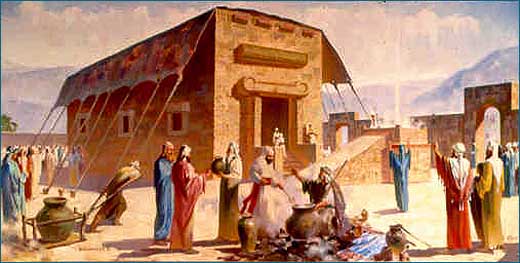
And then Moshe says כי לא באתם עד עתה אל המנוחה ואל הנחלה. There are two different things: המנוחה and הנחלה.
כי לא באתם: כל אותן י״ד שנה… אל המנוחה: זו שילה. נחלה: זו ירושלים.
The obvious question is, why two? Those two sites, Shilo and Yerushalayim, are the most obvious places to say לשכנו תדרשו ובאת שמה. We have cited Rav Medan’s idea that Shilo was the site outside of Bethel where Yaakov camped:
ט ויקרא את שם המקום ההוא בית אל; ואולם לוז שם העיר לראשנה׃ כ וידר יעקב נדר לאמר; אם יהיה אלקים עמדי ושמרני בדרך הזה אשר אנכי הולך ונתן לי לחם לאכל ובגד ללבש׃ כא ושבתי בשלום אל בית אבי; והיה ה׳ לי לאלקים׃ כב והאבן הזאת אשר שמתי מצבה יהיה בית אלקים; וכל אשר תתן לי עשר אעשרנו לך׃
And, of course, Yerushalayim was the place of the עקידה:
ויקרא אברהם שם המקום ההוא ה׳ יראה אשר יאמר היום בהר ה׳ יראה׃
Yehosha picks Shilo as the site of המקום אשר יבחר ה׳…לשכנו תדרשו and there is nothing in the text that says it would ever have to move. But clearly there are two stages: the משכן, symbolically temporary without a roof, and then, when הניח לכם מכל איביכם מסביב וישבתם בטח, it would be time to turn it into a בית המקדש.
א ויהי כי ישב המלך בביתו; וה׳ הניח לו מסביב מכל איביו׃ ב ויאמר המלך אל נתן הנביא ראה נא אנכי יושב בבית ארזים; וארון האלקים ישב בתוך היריעה׃
And the reason that the בית המקדש was not built in Shilo was because of the sins that led to its destruction; that’s the whole plot of ספר שופטים.
סז וימאס באהל יוסף; ובשבט אפרים לא בחר׃ סח ויבחר את שבט יהודה; את הר ציון אשר אהב׃
Why? Why are there two stages of מקדש: מנוחה and נחלה?
The reason is that, for most nations, הניח לכם מכל איביכם מסביב וישבתם בטח, is the sum total of their raison d'être.
We the People of the United States, in Order to form a more perfect Union, establish Justice, insure domestic Tranquility, provide for the common defence, promote the general Welfare, and secure the Blessings of Liberty to ourselves and our Posterity, do ordain and establish this Constitution for the United States of America.
But for us, that’s only the beginning, only a temporary respite: a מנוחה not a נחלה. We have a mission. Once we have a nation, we need to spread the message to the entire world.
מא וגם אל הנכרי אשר לא מעמך ישראל הוא; ובא מארץ רחוקה למען שמך׃ מב כי ישמעון את שמך הגדול ואת ידך החזקה וזרעך הנטויה; ובא והתפלל אל הבית הזה׃ מג אתה תשמע השמים מכון שבתך ועשית ככל אשר יקרא אליך הנכרי למען ידעון כל עמי הארץ את שמך ליראה אתך כעמך ישראל ולדעת כי שמך נקרא על הבית הזה אשר בניתי׃
והביאותים אל הר קדשי ושמחתים בבית תפלתי עולתיהם וזבחיהם לרצון על מזבחי; כי ביתי בית תפלה יקרא לכל העמים׃
At that time, the Jewish people will finally have achieved its goal, that of becoming the (שמות יט:ו) ממלכת כהנים וגוי קדוש, the role model for the rest of the world, the light to the nations, אור לגוים, which was its mission throughout history.
As Rabbi Shulman said in his last shiur here, the ultimate boundaries of the land will extend far beyond the limited boundaries of ארץ ישראל.
ביום ההוא כרת ה׳ את אברם ברית לאמר; לזרעך נתתי את הארץ הזאת מנהר מצרים עד הנהר הגדל נהר פרת׃
From the Nile to the Euphrates isn’t a geographic boundary, it’s a toponym: from one end of civilization to the other. Your influence, ethical monotheism, will reach all the world.
הנה אלה מרחוק יבאו; והנה אלה מצפון ומים ואלה מארץ סינים׃
In Brit Bein HaB’tarim, “ha’Aretz” is defined as the land between the Nile and Euphrates. These rivers are not borders; never in the history of mankind have these rivers marked the borders of a single country. Rather, these rivers mark the two centers of ancient civilization —Mesopotamia (“N’har Prat”) and Egypt (“N’har Mitzrayim”).
…We are to become a nation “declaring G-d’s Name” at the crossroads of the two great centers of civilization.
That is our נחלה and that is what we hope for when we ask for יהי רצון שיבנה בית המקדש במהרה בימינו אמן.